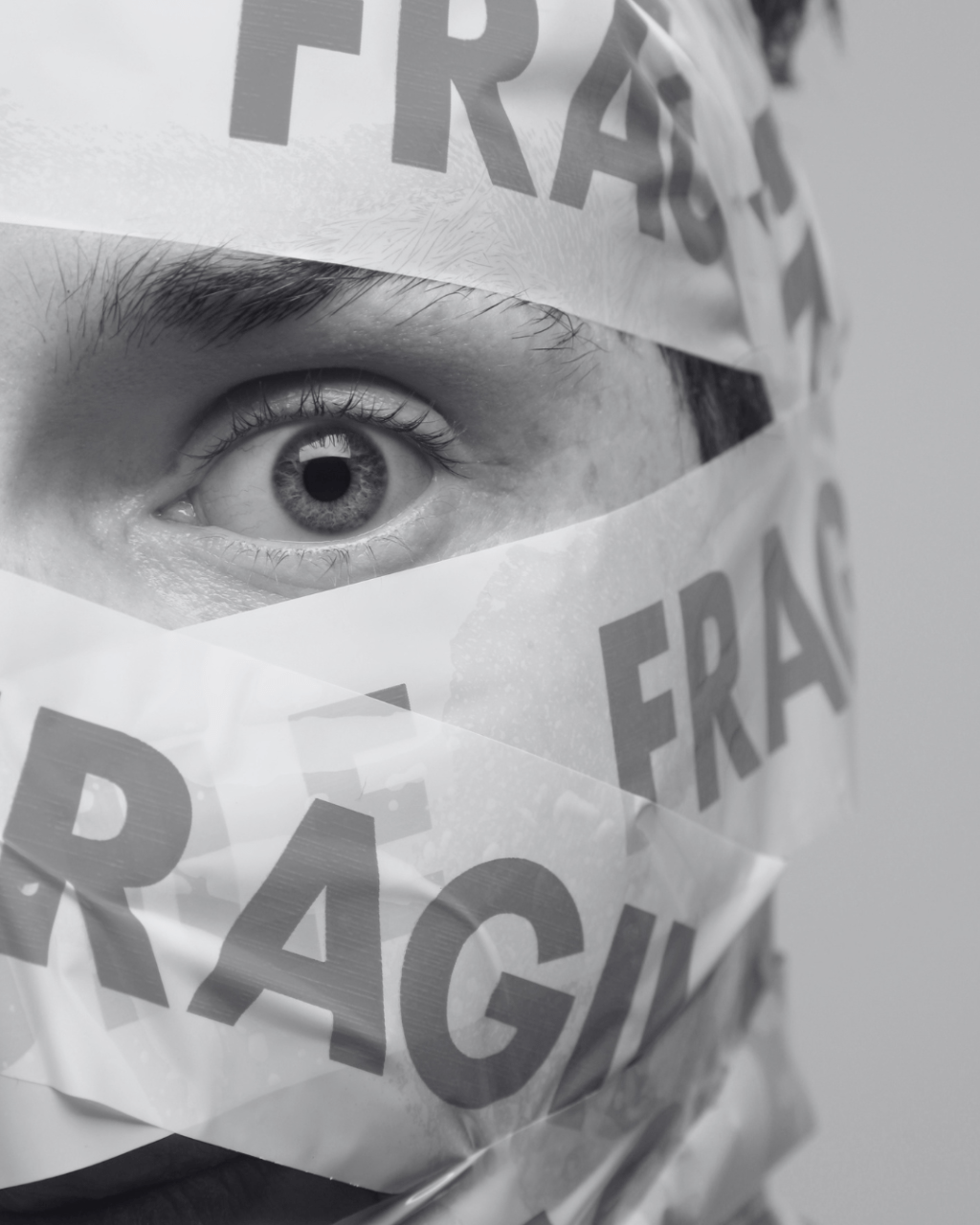
The myth of “non-emotional men” and the damage it leaves behind
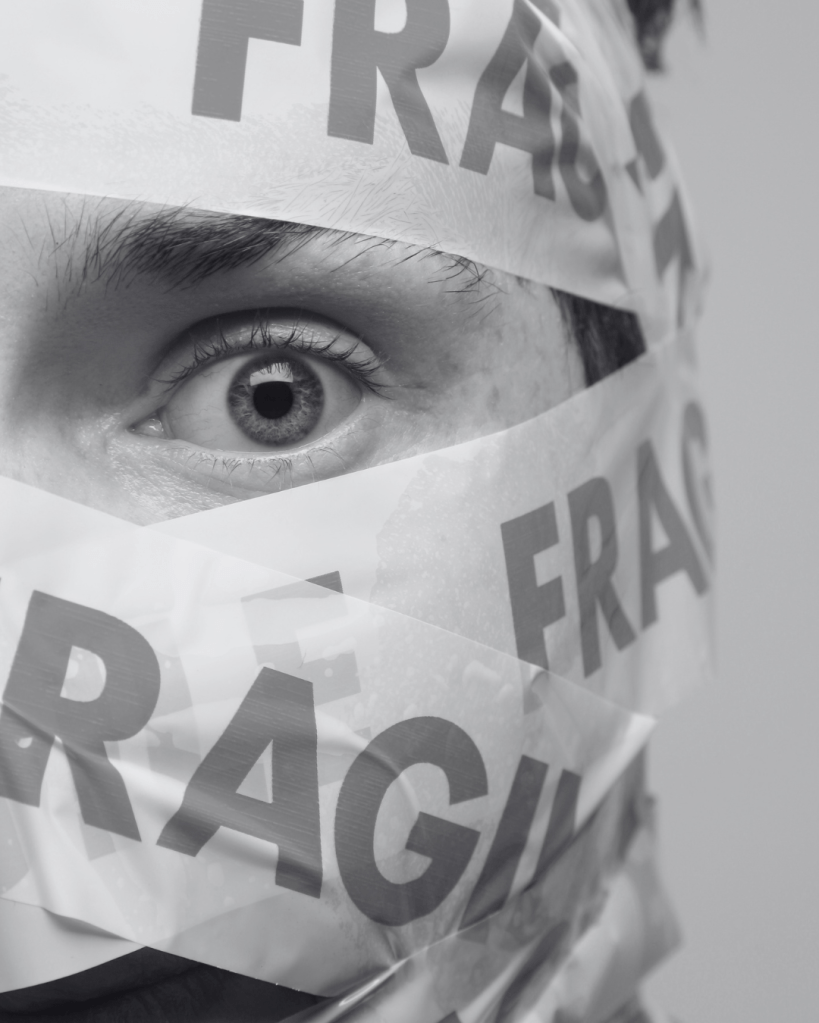
There is a theory sitting in the peer-reviewed academic literature that explains, with the precision of a surgical instrument, virtually every baffling, infuriating, and frankly exhausting thing men have done to women, to each other, and to the entire geopolitical landscape for the last several decades.
It explains the world’s most expensive toddler, Donald Trump. It explains the pint-clutching tribute act to a Britain that never actually existed, Nigel Farage. It explains Andrew Tate and Brother Tate, both of them, the full set, collected like a particularly grim pair of tumours threatening each teste, and their extraordinary achievement of building a multi-million pound empire on the premise that being a rich white man is very hard and women are somehow responsible for that despite men having “built the whole world”, make it make sense.
It explains the manosphere. It explains why a middle-aged man on the internet will spend eleven hours sending death threats to a female footballer he has never met. It explains the incel pipeline, the red pill, the black pill, every pill in the miserable pharmacy of male grievance. It explains why some men physically cannot tolerate a female boss, a female expert, a female surgeon, a female anything that isn’t decorative and compliant.
It explains the trad wife fantasy, which is not, I promise you, about women wanting to bake sourdough and submit gracefully to a man who cannot locate the washing machine. We will get to that later.
One theory. Peer-reviewed. Published in the Journal of Personality and Social Psychology in 2008 by psychologists Joseph Vandello and Jennifer Bosson at the University of South Florida, replicated across cultures, extended across two decades of subsequent research, and somehow still not as well-known as it deserves to be, cuts to the core…
It is called Precarious Manhood Theory, and I am going to ruin your ability to watch the news without it.
What It Actually Says (The Part Where I Am Required To Be Academic Before I Am Allowed To Be Savage)
Here is the core of it, stated plainly before we start sharpening the knives.
Womanhood, as a social status, is generally considered settled. You are born with the relevant biology, you pass through puberty, and the question of whether you are sufficiently female is not, on a normal Tuesday, up for public adjudication. Your womanhood does not require an audience, it does not need to be demonstrated through a series of approved actions, and nobody is standing by with a clipboard waiting to mark you down.
Manhood does not work like that.
Manhood, according to Vandello and Bosson’s research, which includes five studies, rigorously conducted and robustly replicated, is a precarious social status. It is hard won and easily lost. It must be earned through publicly – to other men – verifiable actions and maintained through continued demonstration. It is not a biological fact. It is a performance, and the audience never entirely leaves.
This is the difference between a foundation and a tightrope. Because here is what follows: when a man’s manhood feels threatened, and almost anything can threaten it, a failed test, a woman outperforming him, being told to do something stereotypically feminine, being seen to be uncertain or soft or wrong, the psychological response is not mild discomfort. The research is unambiguous: threatening manhood activates physically aggressive thoughts. Not metaphorically, but measurably, in laboratory conditions, with cortisol levels to match.
Men RAGE when they are threatened, even if it’s just that Barbara is capable of using a spanner, or Sandra mentions she’s seen a bigger dick. Thing is, she wasn’t just talking about genitalia at the time, but this was missed, although neither were meant as a compliment, Derek. And they RAGE more depending on where they were born, raised, and educated. Situational and cultural factors that heighten the precariousness of manhood increase the likelihood of male aggression.
All the above is from the peer-reviewed literature. Hold onto it, because we are about to go on a tour.


A Brief Tour of Men Who Are Definitely Fine and Not Panicking At All
Donald Trump, a sentient debt pile with a persecution complex and a spray tan, has never, in his adult life, allowed anyone to witness him being wrong, uncertain, small, or anything other than the largest and most successful and most virile person in any given room. He cannot admit defeat, absorb criticism, or tolerate being laughed at. He sued a comedian for calling him a short-fingered vulgarian…he sued a comedian for pointing out his hands.
This is not (just) narcissism, though it is also narcissism. This is precarious manhood in a suit that cost more than your car. The presidency is not governance to Donald Trump: it is proof. It is the ultimate publicly verifiable demonstration that he is the biggest, the strongest, the most powerful man alive. Strip it away through an election, a criminal conviction, through anyone pointing out that he lost, and watch what happens to a man for whom the performance of manhood is the only personality he has ever developed.
What happens, it turns out, is January 6th and Iran. Which is what precarious manhood looks like when it has nuclear codes and a Truth Social account.
Nigel Farage, Britain’s most persistent rash and frog-faced fuckwit, is a simpler specimen and therefore easier to dissect. He does not have policies in any meaningful sense, he has posturing. Every studied pint, every performative fag, every calculated bit of man-of-the-people blokeishness is a manhood performance staged for an audience of men who feel that their own status is slipping and who desperately need someone to perform it on their behalf. He is not representing them, he is performing for them. He is the tribute act they hired because they cannot perform it themselves and the anxiety of that is unbearable.
The political project is secondary. The primary product is the feeling of being on the winning side of a manhood competition. This is why facts are irrelevant to his supporters: you cannot fact-check a feeling.
Andrew and Tristan Tate, two human participation trophies for the patriarchy, have achieved something genuinely remarkable: they have monetised masculine anxiety so efficiently that they have become wealthy enough to be genuinely above consequences, at least for a while. The product they are selling is not self-improvement. The product is the feeling of manhood. Buy the course, join the tribe, get the validation, feel like a real man for approximately forty-five minutes until the anxiety returns and you need to buy the next course.
The reason it works on young men is not that those young men are stupid. Most of them are not. The reason it works is that the culture has dug a hole in them and told them that manhood must be earned, that it is always at risk, that women and feminists and immigrants and diversity are actively undermining it, and then handed them a shovel and charged them three hundred quid for the privilege. The Tates did not create male anxiety, they just figured out the business model.
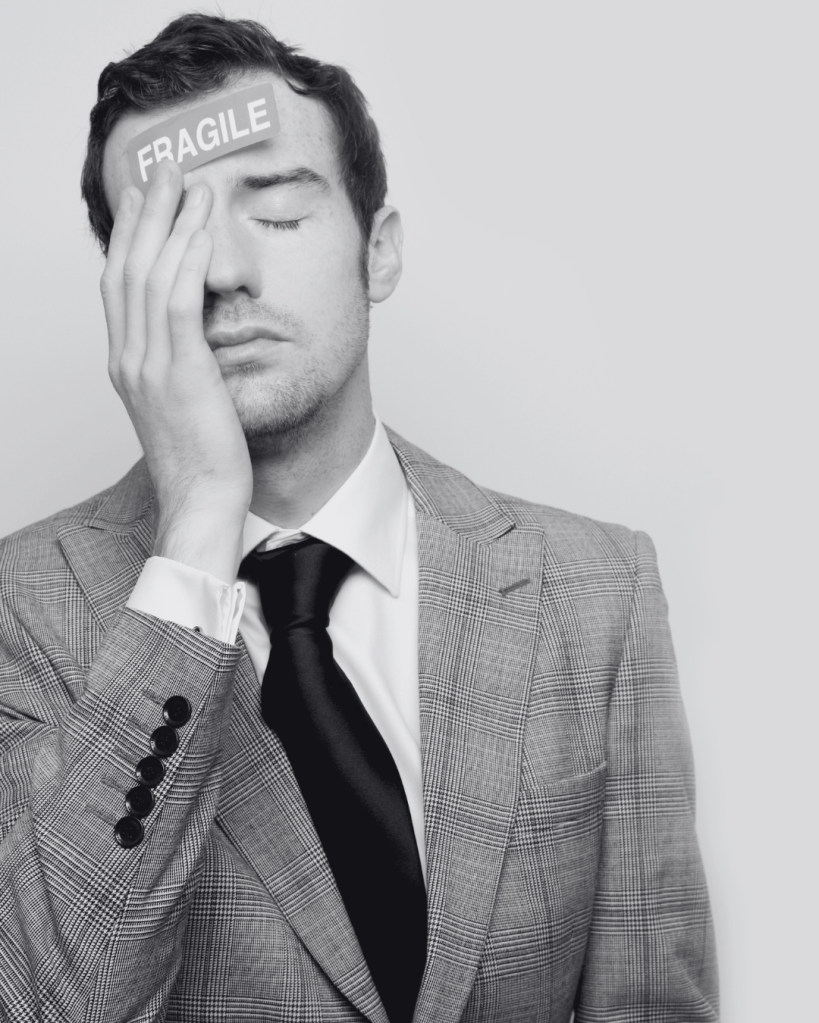

The Rape Academy (No, Really. This Is Where We Are.)
In March 2026, CNN published findings that should have broken the internet. Instead, they trended for a fortnight and then the algorithm moved on, as it always does when the subject is violence against women. The men, meanwhile, kept going.
A Telegram group called “Zzz”, named with the casual contempt of men so certain of their impunity they stopped bothering to hide it, after the sound of a woman rendered unconscious, where nearly a thousand members traded drug dosages, shared assault footage, sold $20 livestream tickets to the rape of their own wives, and offered global shipping of what they called “sleeping liquid” at $175 a bottle. Not the dark web. Telegram, an app on your phone.
This did not begin with the group. It began, publicly at least, with Dominique Pelicot, a man so comprehensively devoid of humanity that “monster” feels like an insult to monsters, who spent nine years drugging his wife Gisèle unconscious and inviting strangers from a chatroom called “Without Her Knowledge” to rape her. She was raped over 200 times by 70 men. They had been married for fifty years. He received twenty years. Do the maths on that.
The website was shut down and the Telegram group was removed, but the behaviour didn’t disappear. It never does. It migrates, rebrands, finds a new platform, and carries on, because the demand doesn’t go anywhere and the men producing it face consequences so negligible they barely register as inconvenience.
Now here is where precarious manhood theory pulls up a chair.
The forensic psychologist who assessed half the men convicted in the Pelicot trial, fifty-one of them, a roster of ordinary-looking, neighbourhood-dwelling, school-run-doing shitstains who would like you to know they didn’t realise she wasn’t consenting, told CNN that within these communities there exists a sense of brotherhood. Men creating bonds that meet their narcissistic needs. The rape is not only the act, it is the proof, witnessed and validated by other men. The most extreme, most irreducible expression of the manhood performance: total dominance over a woman who cannot resist, with an audience of men watching and paying to confirm that yes, this counts, you have proved it, you are a real man now.
FUCK.
French lawmaker Sandrine Josso, herself a survivor of drug-facilitated assault, called these places schools of violence. An online rape academy, where every subject is taught. She is not wrong. And if you want to understand the curriculum, precarious manhood theory wrote the syllabus. The lesson is dominance, the exam is witnessed, and the woman’s personhood is the obstacle to be chemically removed.
In England and Wales, more than half of recorded sexual assaults involved a partner or ex-partner. The proportion of victims assaulted while unconscious or asleep has risen to 23% over the last decade. One in four raped, in their own beds, by men they trusted. Men who filmed it and uploaded it and sold tickets.
The shame, as Gisèle Pelicot said at her husband’s trial, must change sides. She was braver saying that than most people will ever be asked to be. The least the rest of us can do is keep saying it after the algorithm has moved on.

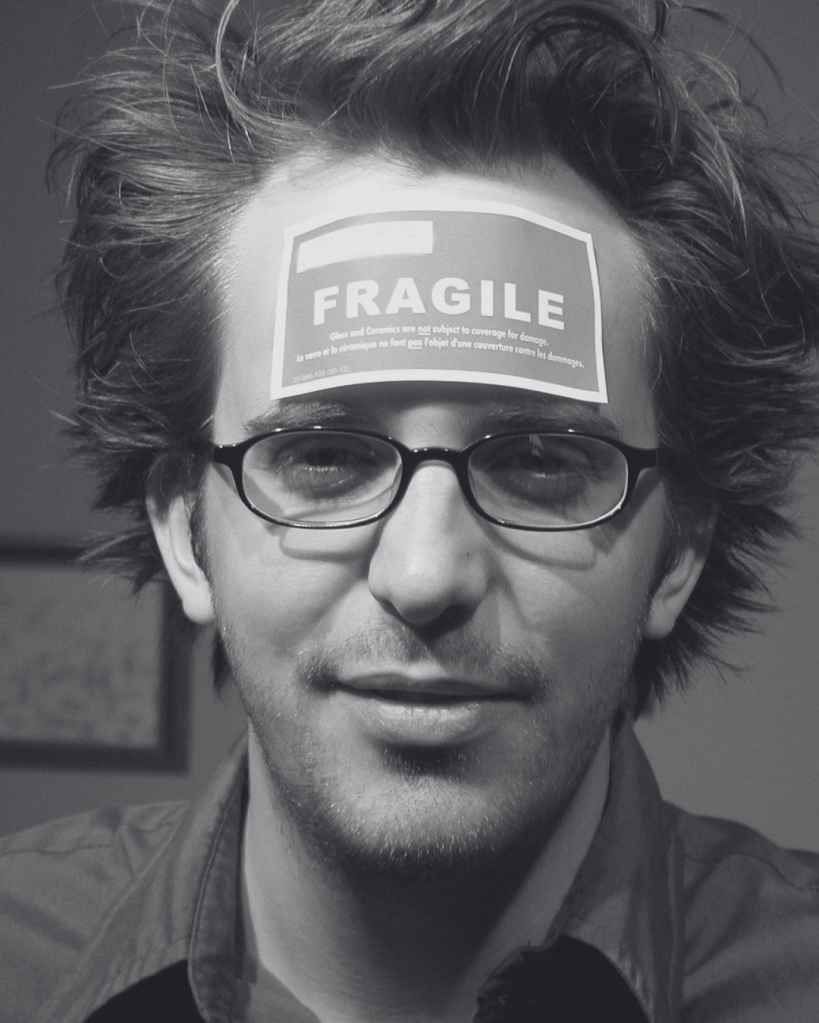
The Trad Wife Fantasy (Bless Her Cotton Socks)
People can organise their domestic lives however they choose. The point is who the fantasy is actually for.
A woman who earns more than her partner, knows more than her partner, is professionally more successful, socially more competent, and demonstrably less in need of validation is not, at least to a man operating under precarious manhood anxiety, a partner. She is a threat. She is a constant, ambient challenge to a manhood that must be earned and can be lost. Every time she succeeds, something in his threat-assessment system twitches.
The trad wife fantasy is the architectural solution to this problem. Make her small enough, dependent, and deferential. Remove the threat entirely by removing the thing that constitutes it, which is her full humanity, and then tell her she should be grateful, that this is liberation, that the submission is actually the power.
It is, to use the technical term, absolutely fucking exhausting and bat shit crazy. It is misogyny in pastels, toddlers, and aromas of sourdough freshly baked croissants.
The Manosphere and the Men Who Are Definitely Not Scared
The manosphere, that sprawling digital archipelago of incel forums, red pill subreddits, men’s rights activists, pickup artist communities, religious cults, and assorted purveyors of masculine grievance, is not, despite appearances, about men who hate women. It is about men who are terrified of women.
Specifically, it is about men whose manhood feels under continuous assault and who have been handed a ready-made explanation for why: women. Women who will not comply. Women who will not validate. Women who are present in spaces that used to belong exclusively to men. Women who have opinions about things and express them out loud without apologising first.
The online misogyny is not incidental to this. The harassment campaigns, the coordinated targeting of women who speak publicly, the death threats sent to female journalists and academics and game developers and anyone else with the temerity to exist in public while female; this is precarious manhood in its rawest, most undisguised form. The aggression is the proof of manhood. The target is whoever is most conveniently available and least likely to punch back.
Here is the particularly cheerful part: cross-cultural research involving more than 33,000 participants across 62 nations found that precarious manhood beliefs are highest in countries with the greatest gender inequality. The more unequal the society, the more anxious men are about their status. The more anxious men are about their status, the more they enforce the inequality that created the anxiety in the first place.
It is, in the scientific literature, described as a cycle. I would describe it as a fucking disaster.

What This Is Not Saying
Precarious manhood theory is not saying that men are inherently violent, inherently fragile, or irredeemable. It is not a counsel of despair about the entire sex.
It is saying that a specific set of cultural beliefs about what manhood is, what threatens it, and how it must be proved creates a specific, measurable, replicable set of behavioural consequences. The beliefs are not inevitable. Other ways of constructing masculinity exist and produce different outcomes. Men are not the problem: the performance is the problem. Patriarchy is the problem.
The tragedy, and there is a genuine tragedy here underneath the savagery, is that the men most imprisoned by precarious manhood anxiety are also the men most likely to enforce it on everyone else. They are in genuine pain, and the performance is exhausting and the anxiety never entirely goes away because manhood cannot ever be finally, permanently proved. There is always another test, another threat, something else to dominate or dismiss or destroy in service of the performance.
That is a miserable way to live.
It does not, however, excuse any of it. Pain is not permission, anxiety is not a defence, and women have been paying the price for male performance anxiety since before the concept had a name in the academic literature.
FOR THE LOVE OF ALL THAT IS HOLY GO TO FUCKING THERAPY. Phew, it feels better to say that.
Why This Matters Right Now
We are living through what happens when precarious manhood goes mainstream, gets a media strategy, and discovers that electoral politics is just the world’s largest dominance competition.
The rollback of women’s rights, the attacks on reproductive autonomy, the assault on gender equality across every sphere where women have spent decades clawing back ground, the appointment of men who have publicly stated that women should have fewer rights, less autonomy, and less presence in public life, and the enthusiastic applause from men who feel their manhood has been under siege and are relieved, finally, viscerally relieved, that someone in power is doing something about it. This is not ideology and it is not policy. This is collective anxiety management on a geopolitical scale, and women are the proposed solution.
We are not the solution, and neither are we the problem. We are simply people who exist, which turns out to be threatening enough.
Precarious manhood theory explains everything. The men it describes are going to absolutely hate that. Which is, of course, the most perfect demonstration of the theory you could possibly ask for.
Cue the insecure comments to do just that…

Sources: Vandello, J.A. & Bosson, J.K. (2008). Precarious manhood. Journal of Personality and Social Psychology, 95(6), 1325-1339. Vandello, J.A. & Bosson, J.K. (2013). Hard won and easily lost. Psychology of Men & Masculinity, 14(2), 101-113. Bosson, J.K. & Vandello, J.A. (2011). Precarious manhood and its links to action and aggression. Current Directions in Psychological Science. Bosson et al. (2021). Psychometric properties and correlates of precarious manhood beliefs in 62 nations. Journal of Cross-Cultural Psychology, 52(3), 231-258.


Leave a Reply