

This morning, before I’d even got out of bed – a late one, earned after days of brutal training – I woke to find a group of men had congregated to decide I don’t exist. Or rather, that my ability to lift heavy things doesn’t exist.
Adorable, really.
The irony? They were so secure in this conviction that the laugh reactors had disabled tagging. Nothing demonstrates confidence quite like ensuring the woman you’re publicly mocking can’t respond. Safety in numbers, anonymity intact, tags disabled – the full coward’s toolkit. One might almost think they were… afraid?
Anyway, those of you who know me as a friend, family member, client, or gym buddy, know that only weeks weeks ago, I won two dinnie stone events. I’m two months out from my next major competition. My training logs would hospitalise most men. But these titans of masculinity – and I use that term loosely – couldn’t spare thirty seconds to check my profile before deciding I was a fraud. They just needed each other’s validation to feel brave enough to express it.
Because apparently, forming an opinion requires peer review when your sense of self is held together with string and masculine delusion.
Here’s what I know: men who laugh at capable women are invariably the weakest ones. Not physically weak, necessarily – though frequently that too. Psychologically weak. The ones whose entire sense of superiority rests on the fantasy that women can’t possibly be strong, because if we can be, what does that make them?
Ordinary. That’s what it makes them. And oh, they cannot cope with ordinary.
This isn’t about one inadequate man or even this particular group. It’s about a pattern as predictable as it is pathetic.
The Precarious Nature of Manhood
Psychologists call it precarious manhood theory: manhood must be constantly proven through publicly verifiable actions. Men experience more anxiety over their gender status than women do, particularly when challenged. Which sounds absolutely knackering, frankly.
Womanhood is biological – permanent, natural, inevitable. But manhood? That’s a performance. A never-ending audition where the reviews are always harsh. When men’s masculinity is threatened – through something as simple as being asked to braid hair in a laboratory – they respond with heightened anxiety and increased aggression.
Imagine living like that. Actually, don’t – it sounds dreadful.
And what could be more threatening to this precarious house of cards than encountering a woman who can do what he’s been told women can’t do?
When She Succeeds, He Diminishes
The research is depressing but predictable. Studies found that heterosexual men feel threatened by their partners’ success in ways women simply don’t. It didn’t matter what the circumstances were – whether the success was social or intellectual, whether it related to the boyfriend’s failure or was independent of anything he did – men still felt worse about themselves when their girlfriends succeeded.
This applied to implicit self-esteem. Men didn’t explicitly report feeling worse, either because they didn’t consciously notice or because they didn’t want to appear insecure. (Spoiler: they’re insecure.)
But the pattern is unmistakable: when women demonstrate competence, insecure men experience it as a threat.

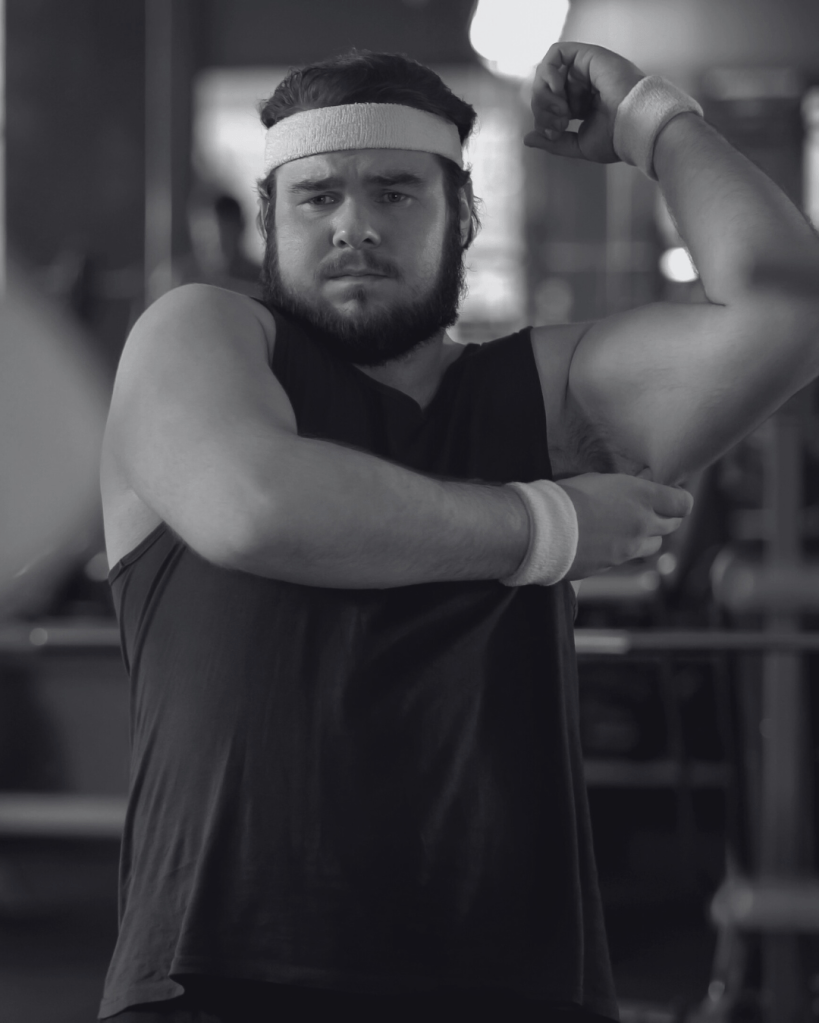
The Testosterone Factor (Or: Why They’re Performing For Each Other)
And here’s where it gets really interesting. We’ve written before about how testosterone doesn’t make men aggressive – it makes them desperate to earn status within their peer group. (Link to that previous testosterone blog here) Testosterone amplifies whatever behaviours earn you respect and validation in your particular tribe.
So when a group of men congregate online to mock a woman’s capabilities? That’s status-seeking behaviour. They’re performing for each other, each trying to be funnier, more dismissive, more cutting, because that’s what earns respect in their corner of the internet.
The testosterone isn’t making them arseholes. Their peer group is. The testosterone is just making them more committed to whatever bollocks the lads are selling. Which requires precisely zero actual capability on their part. They just have to perform their disbelief for an audience of equally insecure men, and boom – status achieved.
It’s like watching peacocks preen, except peacocks are actually impressive.
Research shows insecure individuals cope by belittling to make themselves feel better. During online video game play, unsuccessful men were significantly more likely to express aggression toward women-voiced players. Notice the pattern? It’s not the successful, competent men attacking women. It’s the unsuccessful ones performing for their pack.
Psychology calls this “downward social comparison.” But if you have to tear someone down to lift yourself up in front of your mates, that’s not strength. That’s weakness with an audience.
The Laugh React Phenomenon (Or: The Emoji Of Cowards)
We’ve written before about the laugh react – that peculiarly cowardly form of dismissal where men respond to women’s accomplishments with a little emoji, signalling that what you’ve said is so ridiculous it only merits mockery. (Link that previous blog here)
It’s the digital equivalent of disabled tags. A way to diminish without defending, to belittle without engaging, to signal superiority whilst avoiding any actual test of competence. It’s the “I’m not owned! I’m not owned!” of internet discourse, and about as convincing.
Some men mask their insecurities with humour, making comments that subtly belittle achievements – turning confidence into the punchline to bring her down just enough to feel comfortable again. “Just joking, love. Can’t you take a joke?” – the universal motto of men who know exactly what they’re doing but want plausible deniability.
The problem? These jokes aren’t funny. They’re transparent. And they tell us far more about the joker than the target. When you have to perform your disbelief for an audience, it’s not actually disbelief – it’s theatre. Bad theatre.


Why Confident People Never Punch Down (It’s Really That Simple)
Actually secure, competent people understand this: punching down is bullying; punching up is nobility. It’s not complicated moral philosophy. It’s basic human decency.
Confident people don’t waste energy tearing others down because their self-worth isn’t built on shaky comparisons. They recognise capability when they see it. They celebrate it. They might even learn from it. Because they’re not threatened by it.
Because – and here’s the kicker – confident people understand that someone else being good at something doesn’t make them less good at what they do. Wild concept, I know. Revolutionary, even.
Research on truly confident individuals shows they don’t engage in constant criticism, putting others down, or needing to demonstrate superiority. They’re too busy being actually competent to worry about performing competence. Actual strength doesn’t feel threatened by strength in others. Only weakness does.
And weakness with an audience? Still weakness.
The Cost of Fragile Masculinity
This precarious manhood anxiety has measurable consequences. In countries where people most strongly endorse precarious manhood beliefs, men live over six fewer years than in cultures where people least endorse such beliefs.
Six. Years. They’re literally dying earlier because they can’t cope with the idea that manhood might not be the fragile performance art they’ve been told it is. The patriarchy is killing them, and they’re blaming women for it. Chef’s kiss.
Research on fragile masculinity shows anxious men alternate between chivalry and hostility toward female partners, acting like a knight when she fulfils his ideals about women, but like an ogre when she doesn’t. Translation: insecure men only support women who stay within acceptable boundaries. The moment a woman demonstrates capability that threatens masculine norms, the hostility begins.
“I support women! Just not women who make me feel inadequate by existing!” – A manifesto.


The Dunning-Kruger Effect of Masculinity
There’s another factor: the Dunning-Kruger effect, which demonstrates that people with low competence often have inflated confidence whilst highly competent people underestimate theirs. It’s the “I’ve watched three YouTube videos, I’m basically an expert” phenomenon. And boy, does it apply beautifully to masculine behaviour.
Apply this to gender dynamics and you get men who’ve never tested their own capabilities seriously, but who feel entirely comfortable dismissing women’s demonstrated achievements. Men who are absolutely certain they could beat any woman if they wanted to. They just… don’t want to. Obviously. Very convenient, that.
The correlation between confidence and competence is only about 9%. Which explains precisely why the men who laugh the loudest are usually the weakest. Their confidence isn’t based on competence. It’s based on ignorance, insecurity, and the desperate need to believe that being male automatically makes them superior.
Spoiler: it doesn’t.
What This Actually Reveals
When a man responds to a woman’s capability with disbelief or mockery, he’s revealing his sense of masculine adequacy is so fragile it cannot coexist with female competence. That he needs women to be weak to feel strong.
And when a group of men congregate to do this together? That’s not strength finding solidarity. That’s weakness seeking witnesses.
I’d offer these gentlemen a squat-off, but we both know they won’t show up. They don’t actually want to know if they’re right. They want to perform certainty for an audience.
That’s the thing about punching down: it only works when you don’t actually have to fight. Two dinnie stone wins aren’t a matter of opinion. But insecurity prefers the realm of dismissal and mockery, where no actual proof of competence is required.
It’s cowardice dressed up as criticism. Weakness masquerading as discernment. And we can all see it.


The Final Word (And I Promise Not To Laugh)
To the group who inspired this piece: thank you. Your predictable behaviour has provided excellent material for demonstrating precisely what insecurity looks like when it encounters competence it can’t handle. You’ve been educational, in your way.
Your disbelief changes nothing about my training, my competition results, or my strength. But it reveals everything about yours. And honestly? I’d feel sorry for you if you weren’t so fucking annoying.
And to anyone reading this who’s ever been dismissed, mocked, or disbelieved by insecure men threatened by your capability: their response is not about you. It’s about them. It’s about their fragility, their insecurity, their desperate need to diminish you so they can feel adequate.
Their testosterone is making them perform for their pack. Their precarious sense of manhood is making them anxious. Their Dunning-Kruger confidence is making them loud. And your capability is making all of it painfully, transparently obvious.
Keep lifting. Keep competing. Keep demonstrating exactly what you’re capable of.
Because the men who laugh are always the weakest. And confident people never punch down.

 Mistress Mind
Leave a comment